

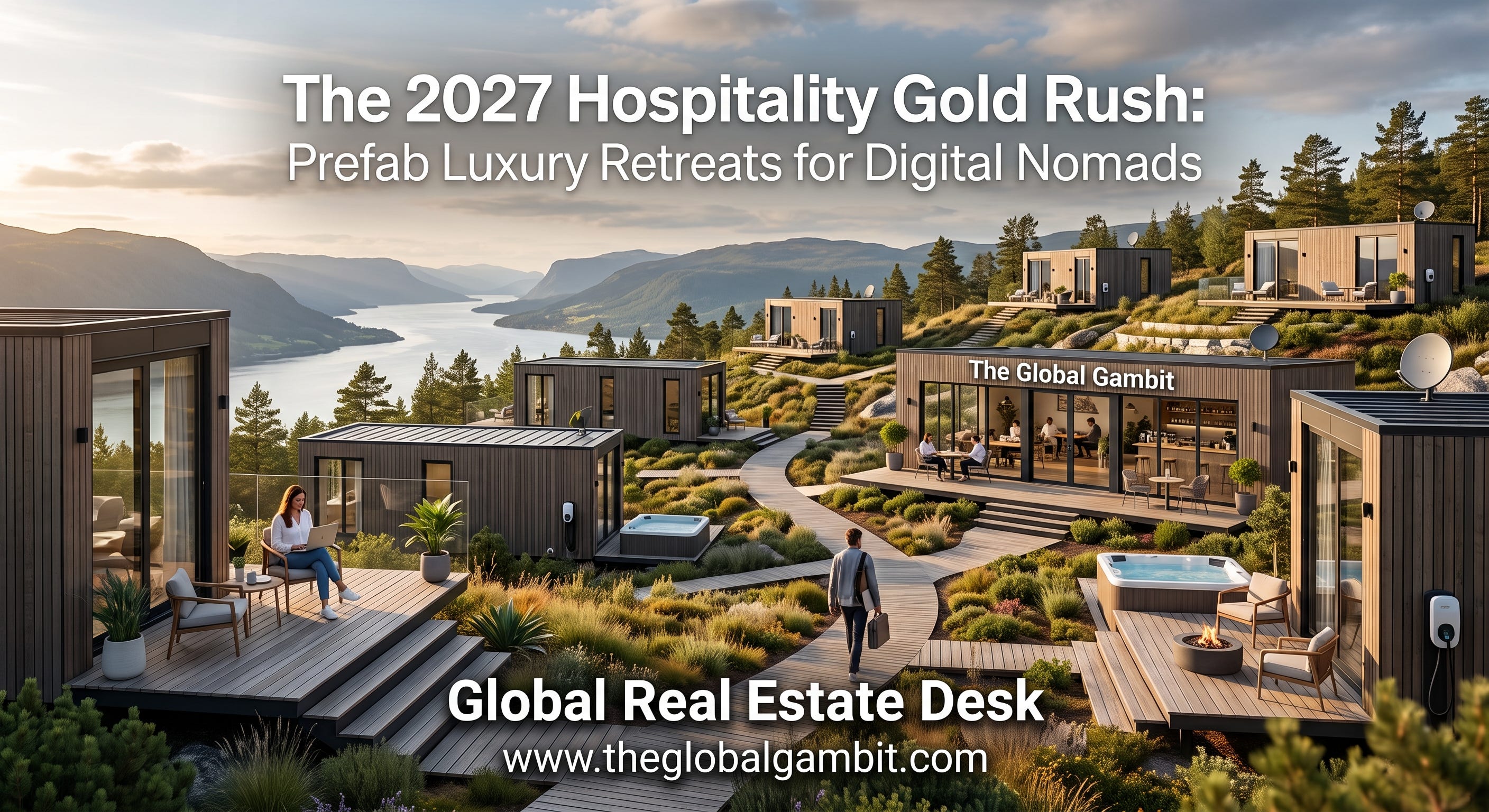
The Modern Gold Rush: High-End Prefab Sanctuaries for the Zero-Tax Nomad Elite.
The definition of “office” has been permanently rewritten. According to the Global Digital Nomad Report, the worldwide remote professional population has surged past 40 million—more than doubling since 2019. But the archetype of the backpacker huddled over a laptop in a noisy hostel is a relic of the past.
Heading into 2027, today’s wealthy, location-independent professionals aren’t just chasing the lowest cost of living. They are seeking luxury, community, high-end infrastructure, and seamless work-life integration. They want infinity pools, green spaces, high-speed Wi-Fi, and smart tech—all nestled in remote, breathtaking environments.
For hospitality developers and real estate investors, this presents an unprecedented opportunity: the prefab tiny home boutique hotel.
By leveraging modular construction in low-tax, high-appeal countries, investors can deploy luxury eco-resorts at a fraction of traditional costs, capturing a high-spending demographic that stays for weeks or months at a time. Here is the definitive feasibility and viability report for building this ultimate digital nomad haven in 2027.
Why Prefab & Tiny Homes? The Investment Thesis for 2027
The conventional hotel development model requires massive capital, years of permitting, and heavy environmental disruption. Prefabricated tiny homes and modular cabins flip this script entirely.
Unmatched Speed to Market: Startups like Moliving are proving that by using portable, factory-built cabins, new hospitality properties can open in months rather than years.
Drastic Cost Reductions: Because 90% of the work is completed off-site in a controlled factory environment, material waste and labor costs are minimized, often reducing overall project expenses by 20% to 30% compared to conventional buildings.
Eco-Friendly & Off-Grid Ready: Prefab cabins align perfectly with modern sustainability trends. Many units come equipped with off-grid capabilities, including solar panels, rainwater harvesting, and greywater systems. This allows developers to build in pristine, remote locations without needing to trench miles of public utilities.
Scalability: The modular nature means you can start small. A boutique hotel can launch with just 10 to 15 luxury units and scale inventory dynamically by shipping in new cabins as seasonal demand dictates.
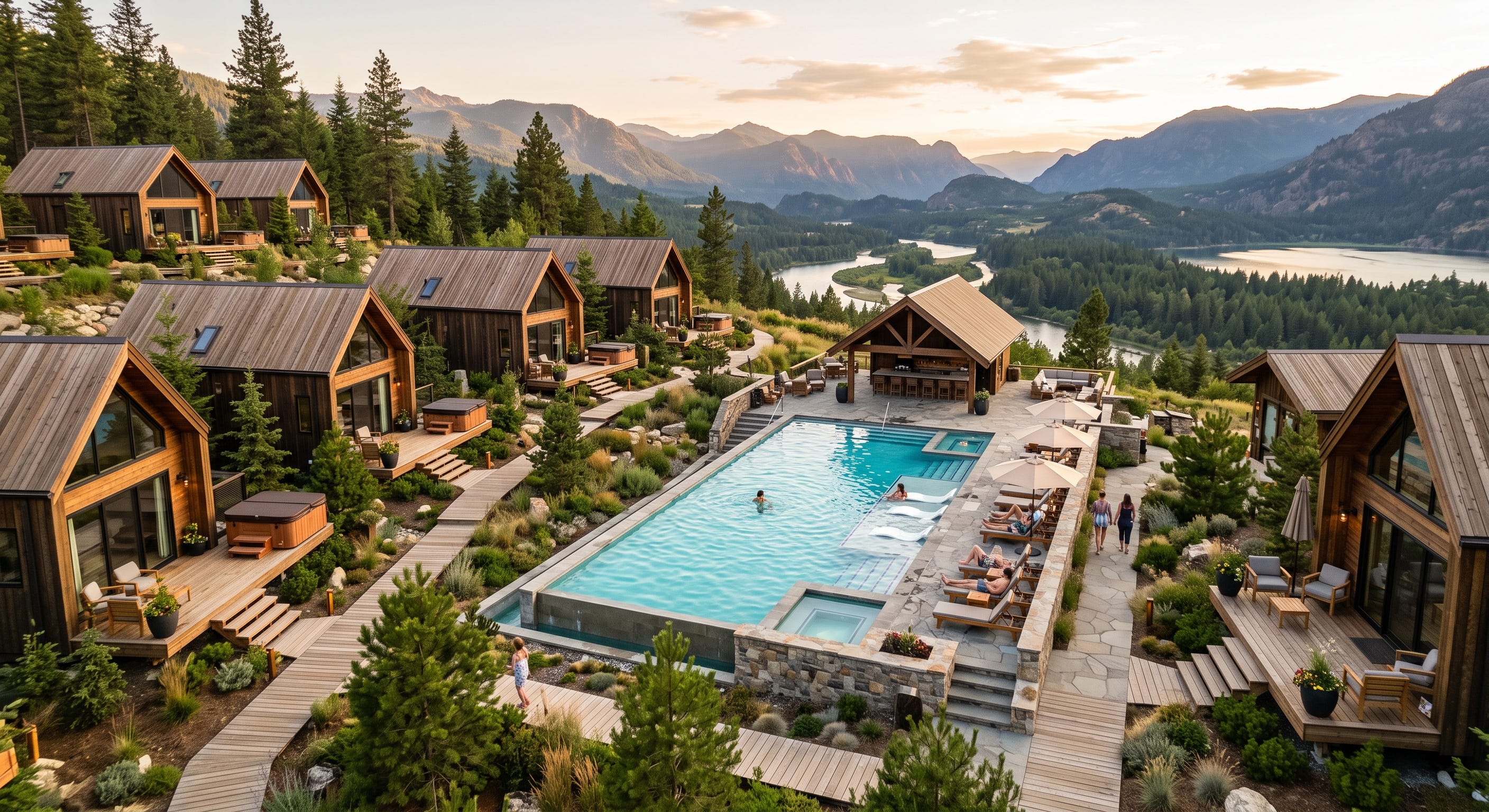
Feasibility and Viability: Designing for the “Luxury Nomad”
To make this business model viable, the product must go beyond just a “bed in the woods.” Digital nomads have distinct needs, and fulfilling them commands premium long-stay rates.
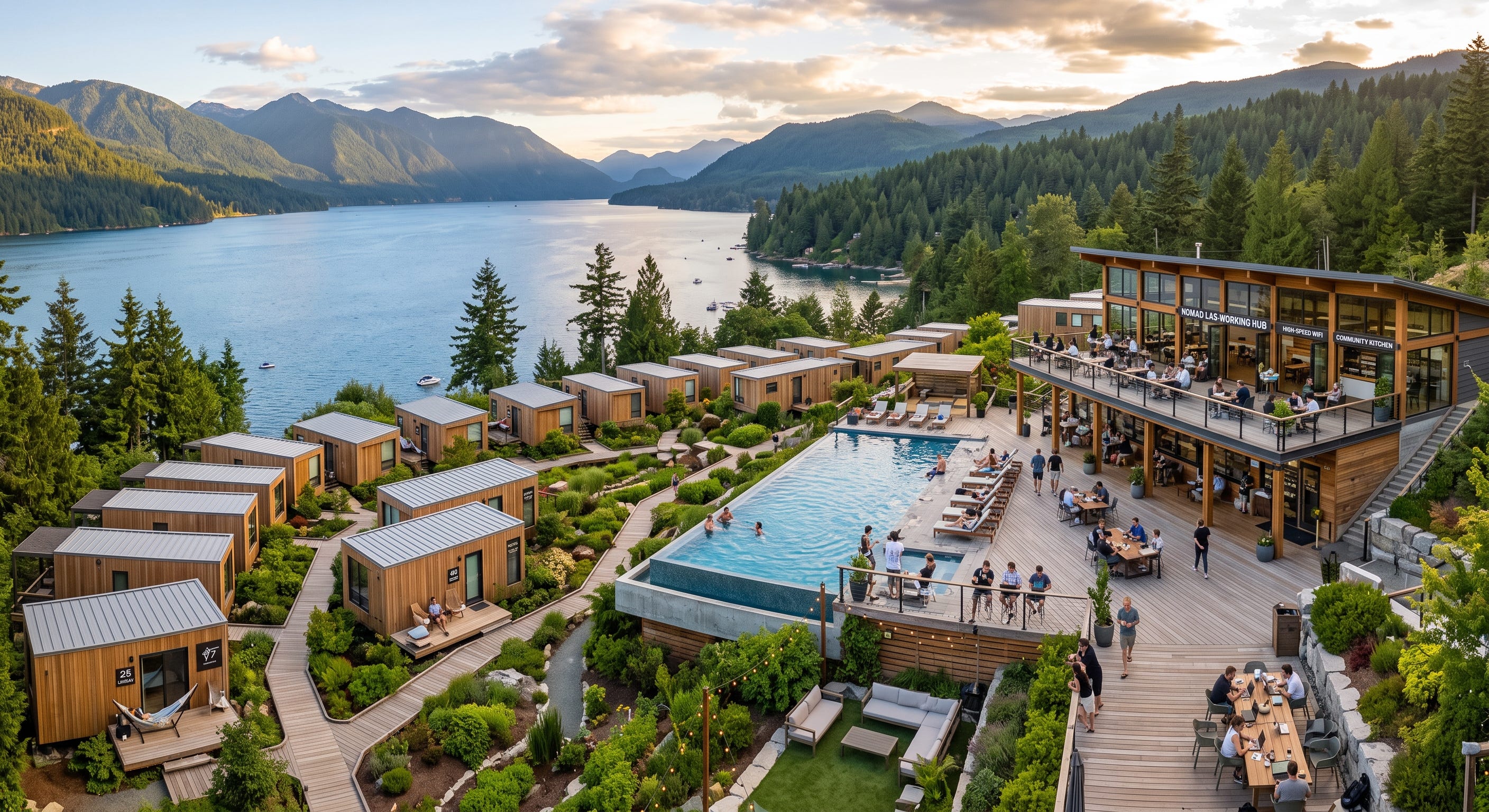
Uncompromising Connectivity: This is the non-negotiable lifeline. Reliable, high-speed internet, dedicated 5G hotspots, and seamless Wi-Fi coverage across the entire property—including the pool and green spaces—are mandatory.
Dedicated Co-Working Infrastructure: The property must feature beautifully designed co-working lounges with ergonomic furniture, soundproof booths for video calls, and ample natural light.
Smart Tech Integration: Contactless check-in, digital room keys, and app-based booking for workspaces and amenities reduce overhead for the operator while streamlining the guest experience.
Community and Wellness: Unlike traditional tourists, nomads stay longer and crave community. Integrating communal fire pits, luxury pools, yoga decks in green spaces, and curated networking events turns a simple stay into a sticky, long-term lifestyle choice.
When combining the 20% to 30% savings on construction costs with the premium rates commanded by luxury remote workers, the ROI timeline on these boutique eco-resorts is drastically shortened.
Top Low-Tax Haven Countries for Development
To maximize the appeal of your boutique hotel, location is everything. The ideal host country for 2027 must offer three things: an easy entry visa for remote workers, a cheap cost of living, and an advantageous tax regime—specifically, exemptions on foreign-earned income.
Here are the top countries that fit this exact criteria perfectly:
1. Costa Rica
Costa Rica is a premier destination that perfectly marries lush remote environments with nomad-friendly policies.
The Tax Advantage: Costa Rica operates on a territorial tax system, meaning income earned outside the country is generally exempt from local taxes.
Visa Accessibility: The “Rentista Plus Visa” allows digital nomads to stay for two years (renewable) with a relatively accessible income threshold of $3,500 per month.
Why it Fits: With its world-famous biodiversity, it is the ultimate canvas for off-grid prefab cabins nestled in green spaces and tropical forests, offering an affordable yet premium lifestyle.
2. Panama
A long-time favorite for expats, Panama offers incredible infrastructure at a fraction of North American costs.
The Tax Advantage: Like Costa Rica, Panama uses a strict territorial tax system, meaning it only taxes income earned directly within its borders. Foreign-sourced income remains untouched.
Visa Accessibility: Panama offers several highly accessible visas, including options that welcome long-term remote workers.
Why it Fits: It offers a very cheap cost of living alongside safe, established expat hubs, making it an excellent location to build luxury remote escapes that won’t break the bank for the operator or the guest.
3. Malaysia
For investors looking toward Southeast Asia, Malaysia provides an unbeatable mix of modern amenities and low living costs.
The Tax Advantage: Malaysia offers highly competitive personal tax rates, and historically, its digital nomad programs have been structured to be incredibly favorable for foreign earners.
Visa Accessibility: The Malaysia My Second Home (MM2H) program and its specific digital nomad visas offer renewable stays of up to 10 to 20 years, with an accessible income requirement of around $1,700 USD per month.
Why it Fits: It is incredibly safe, features a very cheap cost of living, and has a booming remote work scene. A boutique hotel featuring smart tech and luxury amenities in places like Penang or Langkawi would see massive demand.
4. The United Arab Emirates (Dubai / Abu Dhabi)
While not traditionally “cheap” regarding cost of living, the UAE is the ultimate luxury magnet for high-earning nomads and must be considered for high-end boutique investments.
The Tax Advantage: The UAE offers 0% personal income tax, allowing high-net-worth nomads to maximize their take-home pay.
Visa Accessibility: The Virtual Working Program provides a 1-year renewable visa requiring a $5,000 monthly income.
Why it Fits: Dubai is currently ranked first globally for high-net-worth remote workers. Developing an ultra-luxury prefab desert oasis with smart tech and private pools caters directly to this zero-tax, premium clientele.
The Bottom Line
The hospitality industry of 2027 belongs to those who adapt. By merging the cost-efficiency of modular tiny homes with the undeniable allure of zero-tax, low-cost remote havens, developers can create high-yield, sustainable assets. For the digital nomad, it’s paradise found. For the investor, it’s the future of real estate.
Beyond the View: The Hidden Traps of Buying Real Estate in Georgia (Tbilisi & Batumi)
Location and price draw buyers to Tbilisi and Batumi, but failing to inspect a building’s mechanical and electrical systems can turn a dream investment into a high-rise nightmare.
Priced for Perfection: The Danger of Overpaying for Future Wins
A powerful catalyst is worthless if the market has already priced it in. What the UAE’s casino boom teaches us about managing risk.
Where Smart Money is Moving: The 2026 Global Real Estate Guide
From tax-free yields in the UAE to lifestyle havens in Portugal, discover the prime markets attracting Chinese wealth, European capital, and global retirees.
Chasing Yield in Izmir: Turkey’s 2026 Real Estate & Regulatory Outlook
Navigating Turkey’s Property Market: An Analysis of Izmir’s 2026 Outlook
Excellent work!!
If only I had some money to buy land and do this. Sounds genius for the next decade at least!!
Also, to factor in a nearby port to reduce the transportation costs from port to site. Other option relying on a local contractor. It comes with its own set of challanges.